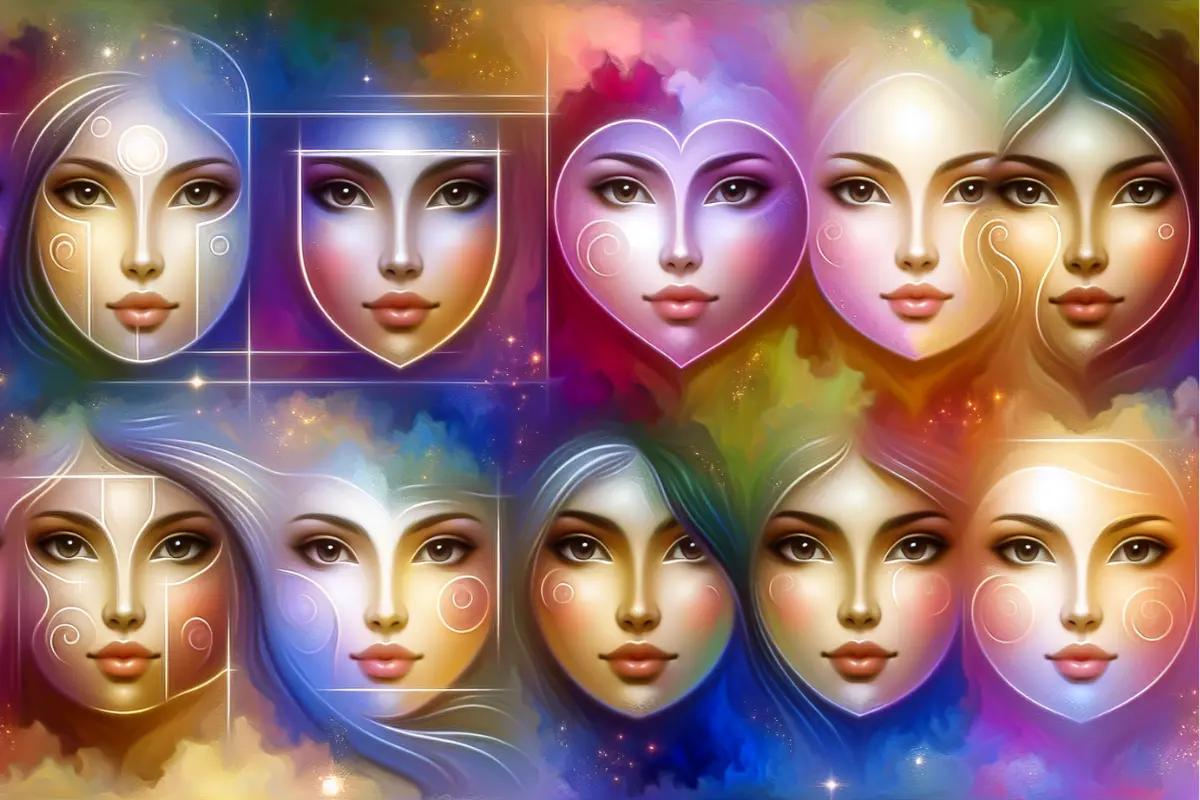
There's no single "most attractive" face shape. But research does show some patterns. Oval and heart shapes tend to score highest in studies. Square faces rank high for men. And symmetry matters more than any specific shape.
The real answer is more interesting than a simple ranking. Here's what science, culture and celebrity examples actually tell us.
Is Oval Really the Most Attractive Face Shape?
Oval faces show up at the top of most attractiveness studies. The reason is balance. An oval face is about 1.5 times longer than it is wide, with the cheekbones as the widest point. Nothing sticks out. Nothing looks too narrow or too broad.
Researchers at the University of Toronto and UC San Diego found that faces are most attractive when the vertical distance between the eyes and mouth is about 36% of the face's length. The horizontal distance between the eyes should be about 46% of the face's width. These ratios naturally occur most often in oval faces.
Celebrities with oval faces include Beyonce, Jessica Alba, Charlize Theron and Megan Fox. Their features sit in balanced proportion, which is why they can pull off almost any hairstyle or makeup look. Check out the best hairstyles for oval faces to see how this works in practice.
But "most common in studies" doesn't mean "only attractive option." It just means oval faces hit the mathematical averages that our brains find pleasing.
Why Do Heart-Shaped Faces Score So High?
Heart-shaped faces are the close runner-up in attractiveness research. In many Asian beauty studies, they actually rank first. The V-shape taper from wide cheekbones to a narrow chin creates a youthful look that people across cultures find appealing.
The wide forehead and high cheekbones draw attention to the eyes. The pointed chin adds definition. Together, they create a face that looks both delicate and defined.
Reese Witherspoon is the classic heart-shaped face. Her wide forehead and narrow chin are instantly recognizable. Scarlett Johansson, Jennifer Garner and Halle Berry also have heart-shaped faces, each with a slightly different take on the shape.
The heart shape also tends to look younger for longer. The width at the cheekbones resists the sagging that comes with age, which is part of why this shape is so popular in cosmetic surgery goals. If you have this face shape, here are the best hairstyles for heart-shaped faces.
Does Face Symmetry Matter More Than Shape?
Yes. Every major study on facial attractiveness puts symmetry near the top of the list. A perfectly symmetrical face signals good health and strong genetics. Our brains process symmetrical faces faster, which creates a feeling of "rightness" that we interpret as beauty.
Here's the thing: no human face is perfectly symmetrical. But faces that come closer to symmetry consistently score higher in attractiveness ratings, regardless of their shape. A symmetrical round face will usually be rated more attractive than an asymmetrical oval face.
A 2011 review published in Philosophical Transactions of the Royal Society found that symmetry, averageness and sexual dimorphism are the three biggest factors in facial attractiveness. Shape came after all three.
So if you're worried about having the "wrong" face shape, don't be. How evenly your features are spaced matters more than whether your face is oval, round or square.
What About the Golden Ratio and Beauty?
You've probably seen claims that beautiful faces follow the golden ratio (1.618). The idea sounds scientific. But the evidence is shaky.
A 2024 review in Maxillofacial Plastic and Reconstructive Surgery found "no convincing evidence that the golden ratio is linked to idealized human proportions or facial beauty." When researchers measured actual attractive faces, more than half the measurements didn't match the golden ratio at all.
The University of Toronto study found different ratios that actually predict attractiveness better: 36% for eye-to-mouth distance and 46% for eye spacing. These aren't golden ratio numbers. They're averages, meaning the most attractive faces look closest to the average of all faces a person has seen.
This is called the "cognitive averaging" theory. Your brain builds a mental average of every face you encounter. Faces that sit close to that average feel familiar and attractive. Faces that deviate far from it feel less appealing, regardless of their specific shape.
| Factor | What Research Shows | How Much It Matters |
|---|---|---|
| Symmetry | Faces closer to symmetrical are rated more attractive | High |
| Averageness | Faces close to the population average score well | High |
| Sexual dimorphism | Feminine features in women, strong jaw in men | Moderate |
| Face shape | Oval and heart tend to score highest | Moderate |
| Skin quality | Clear, even-toned skin boosts ratings significantly | High |
| Golden ratio | Weak evidence, most attractive faces don't match it | Low |
Which Face Shape Is Most Attractive on Men?
The rules shift for men. While oval still scores well, square and rectangular faces often rank higher in male attractiveness studies. The reason is sexual dimorphism: features that signal testosterone, like a strong jaw and broad forehead, are rated as more masculine and attractive.
Think of Henry Cavill's square jaw, Brad Pitt's angular features, or David Beckham's oval face with a defined jawline. All attractive, all different shapes.
| Face Shape | Male Celebrities | Why It Works |
|---|---|---|
| Square | Henry Cavill, Brad Pitt | Strong jawline signals confidence and masculinity |
| Oval | David Beckham, George Clooney | Balanced proportions work with any style |
| Rectangular | Ben Affleck, Chris Hemsworth | Length and angles create a commanding look |
| Diamond | Johnny Depp, Ryan Gosling | High cheekbones add an artistic, striking quality |
For men, jawline definition seems to matter more than overall face shape. A study in the journal Evolution and Human Behavior found that women rate men with wider jaws and larger cheekbones as more attractive for short-term relationships. For long-term partners, softer features score higher.
Can You Make Any Face Shape More Attractive?
Yes. And you don't need surgery. The biggest factors you can control are:
Hairstyle. The right cut changes how your face shape reads. A round face can look more angular with layers and side parts. An angular face can look softer with waves and curtain bangs. The wrong haircut can hide your best features. The right one puts them on display.
Skin health. Multiple studies show that skin quality affects attractiveness ratings as much as facial structure. Clear, even-toned skin with a slight warm undertone consistently scores high. This is something anyone can improve with a basic skincare routine.
Grooming and makeup. Contouring can reshape how your face looks in minutes. Strategic use of highlight and shadow can widen a narrow face, slim a round one, or soften a square jaw. For men, a well-groomed beard can add definition to a softer jawline.
Posture and expression. How you carry yourself affects how people perceive your face. A slight head tilt and genuine smile have been shown to increase attractiveness ratings across all face shapes.
Confidence. It sounds like a cliché, but research backs it up. People rate the same face as more attractive when told the person is confident. Self-assurance changes how others see your features.
Does Your Face Shape Change as You Age?
Yes, and it matters for attractiveness. Fat pads in your face shift downward over time. Your jawline loses definition. The overall shape of your face changes from its youthful version.
Oval faces tend to hold up well because their balanced structure doesn't depend on sharp angles that soften with age. Heart-shaped faces also age gracefully because the cheekbone width stays relatively stable.
Round faces can actually benefit from aging. As baby fat thins out, the bone structure underneath becomes more visible. Many people with round faces find they look better in their 30s and 40s than they did in their 20s.
Square faces may soften at the jaw over time, which can actually create a more balanced look. The strong bone structure underneath keeps things from sagging as quickly.
The face shape you have now isn't the one you'll have forever. That's worth keeping in mind before you decide your shape is somehow "wrong."
What Does Science Actually Say About Face Shape and Beauty?
Here's the honest summary: face shape is one piece of a much bigger puzzle — individual features like eyes and smile play a big role too. The research points to a few clear takeaways.
Symmetry matters more than shape. A symmetrical face of any shape will score higher than an asymmetrical face with the "ideal" shape. Averageness matters too. Faces that sit close to the population average tend to be rated as attractive because they feel familiar.
Oval and heart shapes score highest in most studies, but the differences between shapes are smaller than you might expect. The gap between the "best" and "worst" face shape is much smaller than the gap between good and poor skin, or between symmetrical and asymmetrical features.
Cultural standards also shift. In many East Asian countries, the V-shaped (heart) face is the top beauty standard. In Western media, strong jawlines on men and high cheekbones on women get the most attention. What's "most attractive" depends on where and when you ask.
Every face shape has attractive examples. If your face shape bothers you, the right hairstyle and grooming habits will do more for your appearance than worrying about bone structure you can't change. For a focused look at what works best for women, our dedicated guide covers makeup, contouring and styling by shape. Work with what you have.